Society of the Untitled: An Ecology of Truth Without Diplomas
A philosophical inquiry into contemporary academia, intellectual formation, and a holistic understanding of truth through the educational thought of Al-Farabi, Avicenna, and Al-Ghazali.
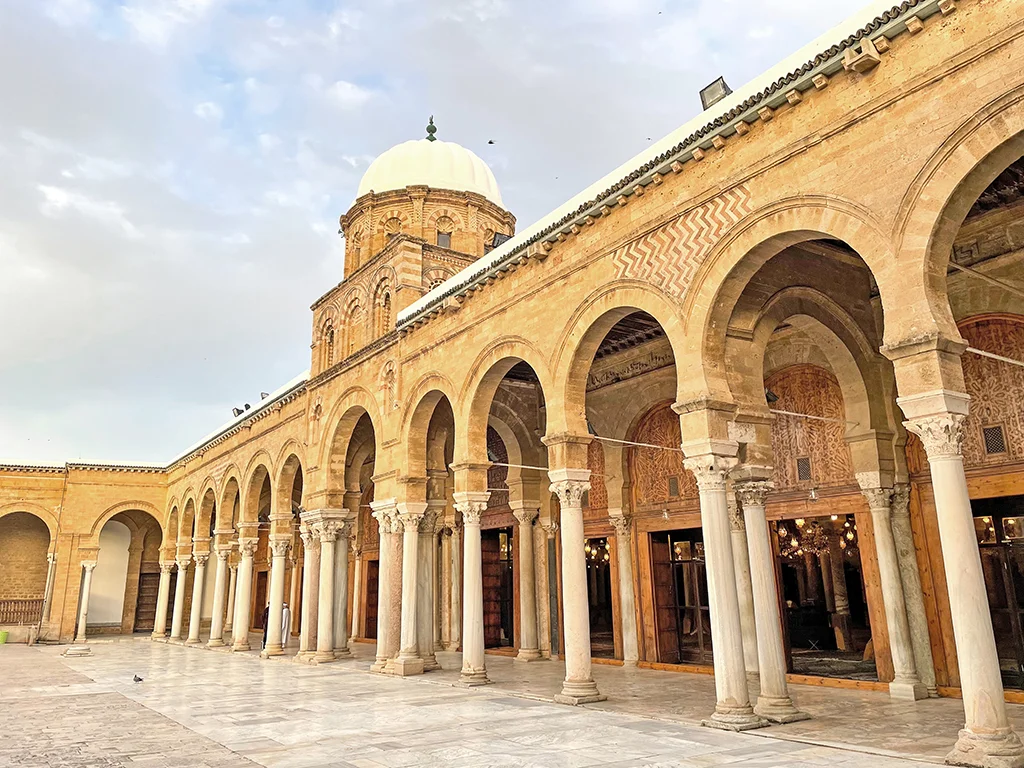
Which university did Al-Farabi graduate from? None. Did Avicenna hold a diploma? He did not. At which institute did Al-Ghazali earn a doctorate? None in the modern sense. He taught at the Nizamiyya, yet his real formation took place before teachers, in the depths of texts, and amid the heat of disputation. This apparent lack is precisely what still places them at the center of intellectual reflection centuries later.
Their minds were shaped not by institutions but by intellectual climates. They grew within circles gathered around a teacher, sharpened by questions, immersed in texts, and nourished by objection. Those circles offered more than instruction: they cultivated character. Instruction loads the mind with information; formation gives depth to the soul. One transmits knowledge, while the other turns knowledge into understanding.
Modern universities have tried to make knowledge manageable by dividing it. The physicist knows little of metaphysics, the biologist of theology, and the sociologist of philosophy. Each is confined to a narrow horizon and loses sight of the whole tree. In the classical tradition, Avicenna could discuss medicine alongside the states of the soul, Al-Farabi could build systems of logic while studying musical harmony, and Al-Ghazali could write on jurisprudence while seeking remedies for the diseases of the heart. Truth did not permit such fragmentation.
Today this unity has been replaced by disciplines trapped inside their own wells. Quantum physics is detached from metaphysics, artificial intelligence from philosophy, and medicine from the question of the soul. This separation does not merely produce knowledge; it can also manufacture ignorance by mistaking isolated information for wisdom.
We therefore need a new understanding of the school. It can be neither Western-centered nor Eastern-centered, because truth cannot be divided by geography. It must stand between physics and metaphysics, blind to neither, bringing what is observed by the eye and inferred by reason under the light of the same truth.
Such a school cannot be reduced to open enrollment. Formation requires dedication. Its threshold should read: “Those who do not know themselves cannot enter.” The pursuit of truth is not a matter of curiosity alone but of commitment. It seeks neither diploma, title, nor office; it seeks truth itself.
Its curriculum would not resemble that of today’s universities. Quantum mechanics might be studied beside Ibn Arabi’s unity of being; artificial intelligence beside Al-Ghazali’s critique of causality; medicine beside Al-Farabi’s ethics. Contemporary discoveries do not simply repeat classical ideas, but they reopen some of their deepest questions: the boundary between observer and observed, the identity of the thinking subject, and the unity of body and inner life.
Modern science often aims at technical success rather than the good life. Yet technical success without ethics becomes a threat. Artificial intelligence without moral judgment may harm humanity; medicine that ignores the person may heal a body while wounding a human being. Knowledge without an ethical body becomes a weapon.
The central principle of this new school is therefore not certification but formation: internalizing knowledge until it becomes not a garment but a skin. It begins with knowing oneself, continues through confronting the ego, and matures through purification of the heart. Truth is not attained merely by knowing; it also requires becoming.
This school speaks not to the many but to those willing to go deep. Truth has rarely belonged to crowds. Only a few leave the cave while the majority continue watching shadows on its walls. As most pursue diplomas, a minority must pursue truth—and that minority may plant the seeds of a new civilization.
How can such a school be founded? Not primarily through a building, regulation, or standardized curriculum, but through circles gathered around a teacher, reading a text, debating a question, and helping each person discover a disciplined way of thinking. The place matters less than the intention; the institution less than its spirit.
In these circles, present scientific discoveries would be reconsidered through the concepts of the classical tradition. A new understanding of knowledge could emerge: neither wholly physical nor wholly metaphysical, neither Eastern nor Western, neither merely ancient nor merely modern.
Our present conception of knowledge falls into extremes: it either absolutizes matter or absolutizes spirit. Truth demands balance. The students of a renewed school would be enslaved by neither physics nor metaphysics; they would judge both responsibly. The decisive question is not only how much is known, but how it is known.
What must be abandoned is not learning itself but the structure that narrows minds, limits horizons, and fragments the human being. The alternative is not a retreat into the past, but a future nourished by it—one in which the spirit of Al-Farabi, Avicenna, and Al-Ghazali can meet today’s physicists, AI researchers, and physicians.
Together, we may seek a truth positioned between metaphysics and physics, blind to neither. Perhaps then we can recover a way of knowing with both eyes open.